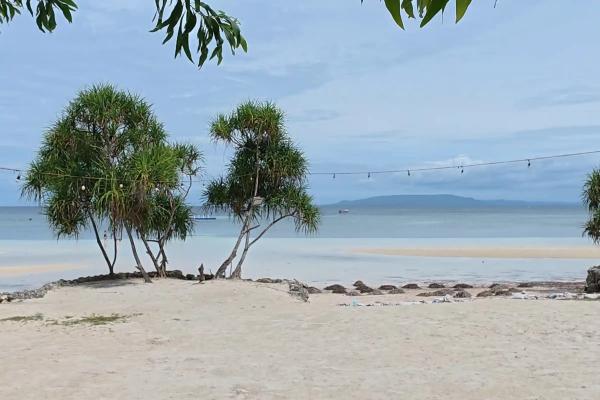
We left Pasay at midnight and drove for about three hours to reach Real Port in Quezon. We arrived close to 3 AM, paid PHP 100 to park the car for the day, and waited. So many people were heading to Jomalig that week that a line for the boats had already started forming before sunrise.
The boat finally left Real at 6 AM, and the crossing took close to five hours. The fare was PHP 700 per person. Land appeared again a little before 11 AM. After nearly five hours on open water, the first things I noticed were how clean the air felt and how quiet everything around us was.
First Hours on Jomalig Island Quezon Province
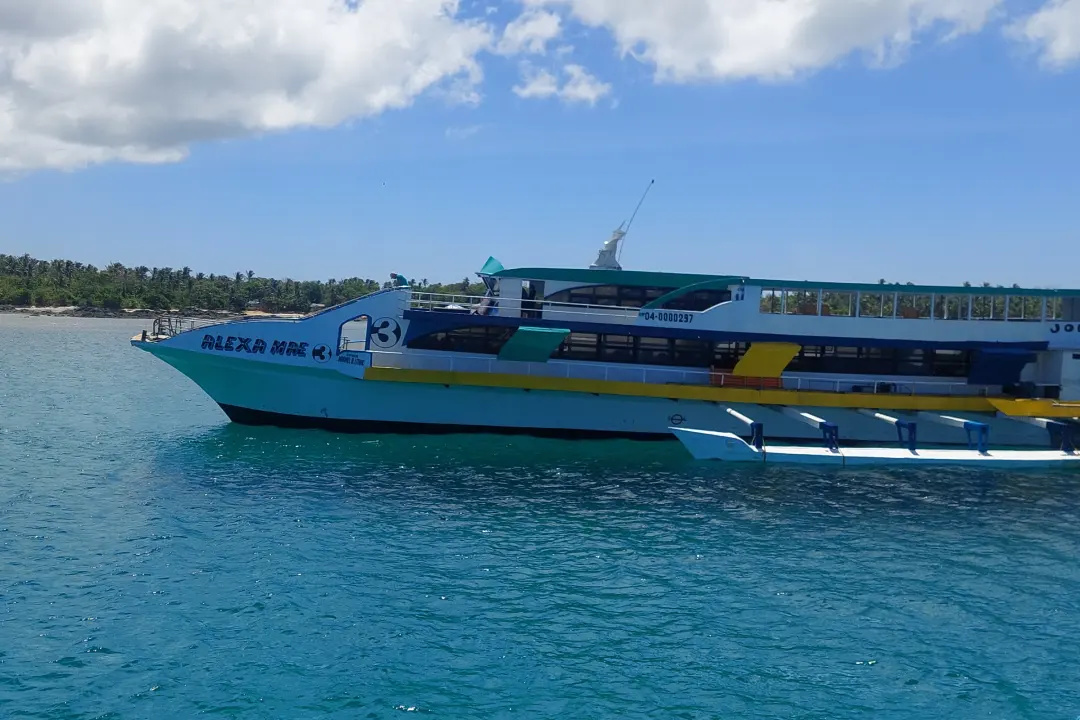
The boat that carried us across Lamon Bay was the Alexa Mae, one of the passenger ferries running the Real to Jomalig route on a schedule that bends more than it holds. It eased against the dock a little before eleven, outriggers settling into water clear enough to see straight down to the sand below.
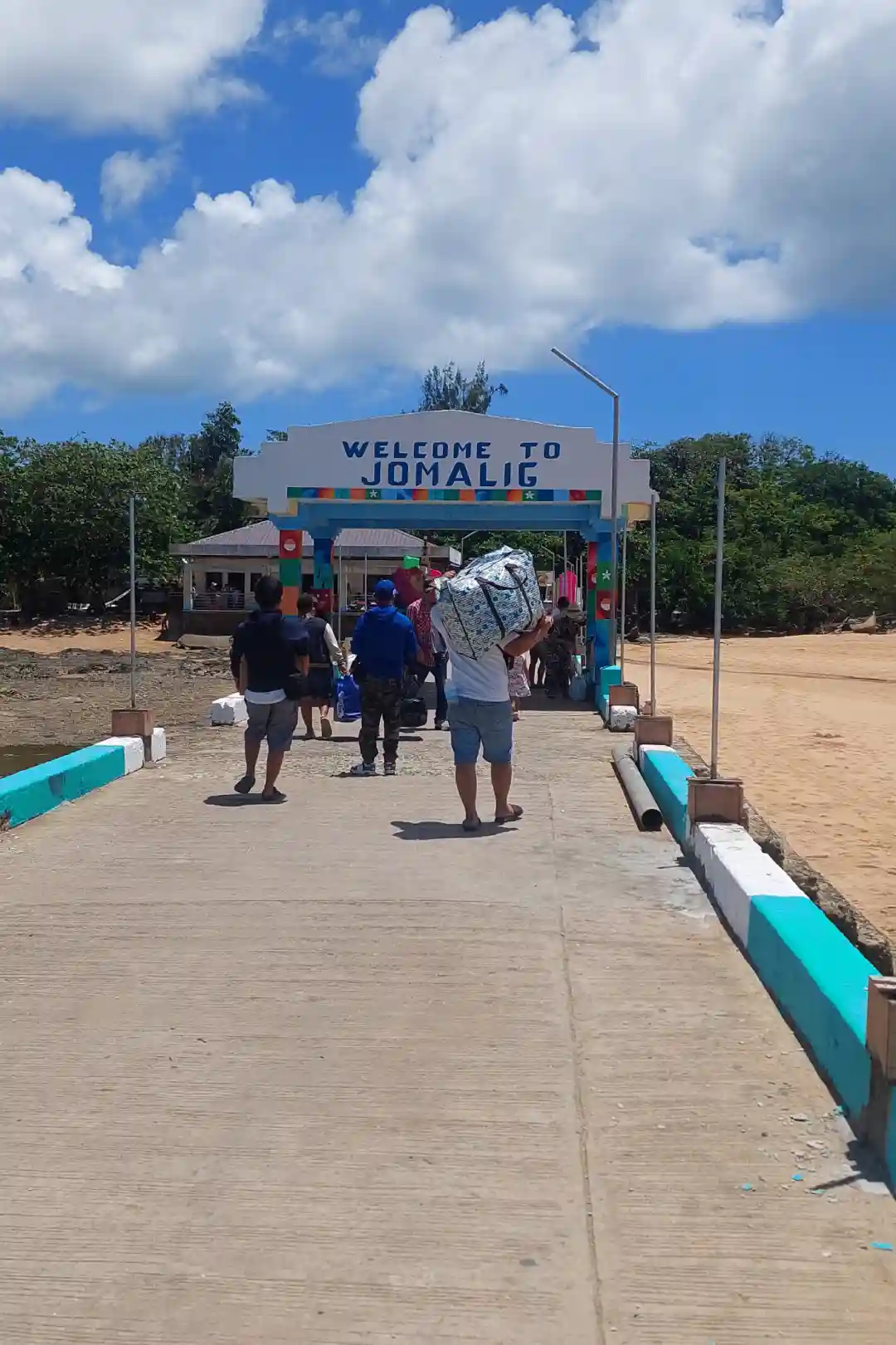
A short walk down the pier led under a hand painted arch reading Welcome to Jomalig, the kind of marker that confirms you have reached somewhere distinct rather than just another stop along the coast. Porters and passengers moved past it together, bags balanced on shoulders, slippers slapping against the concrete.
From the port, a van took us to La Sable Beach Resort for fifty pesos a person, the place we had booked online through Facebook a few weeks earlier. By early afternoon we had already wandered down to the water, drawn by a stretch of sand the color of raw honey under the early light.
What Jomalig's Shoreline Actually Looks Like
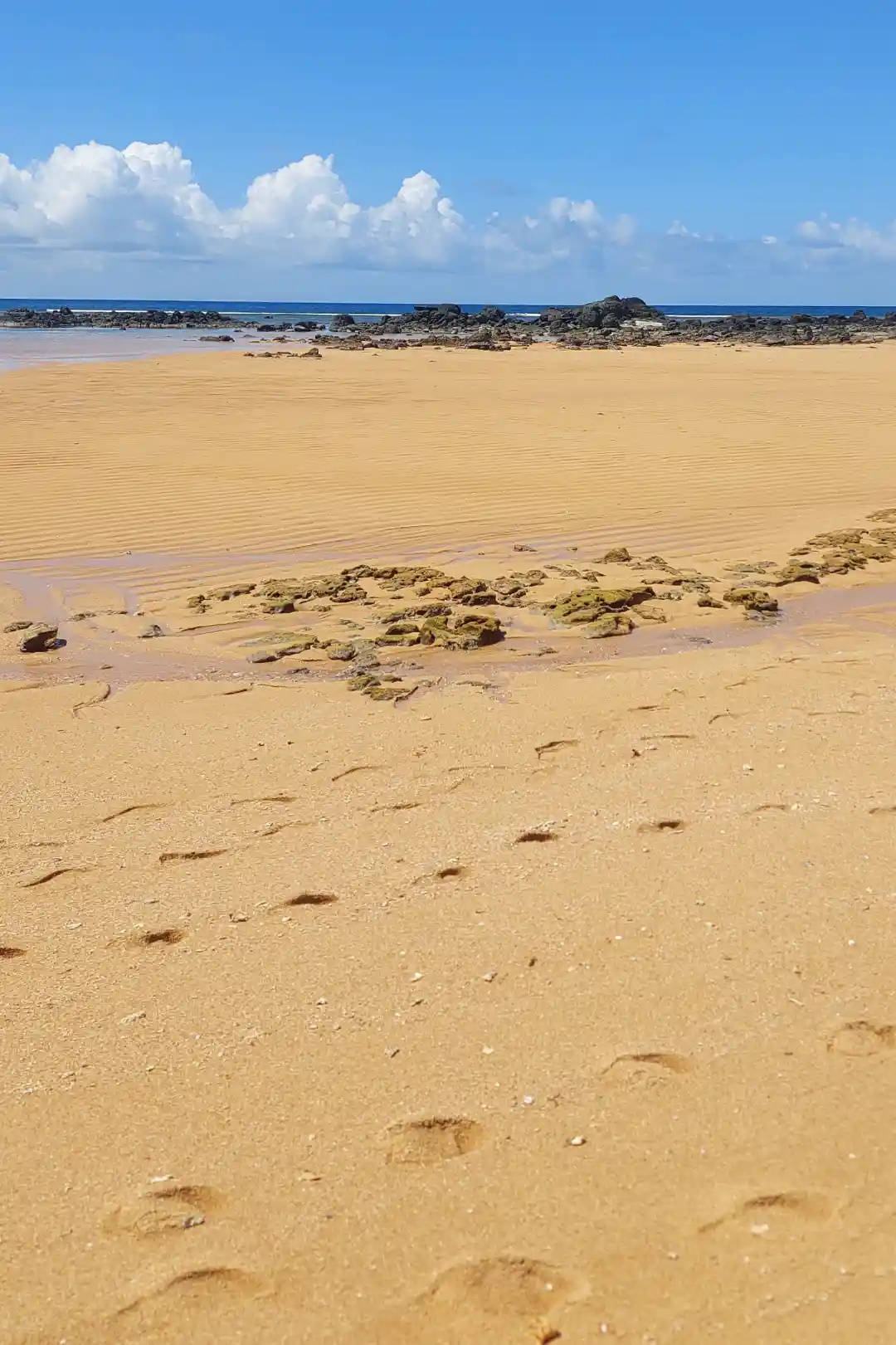
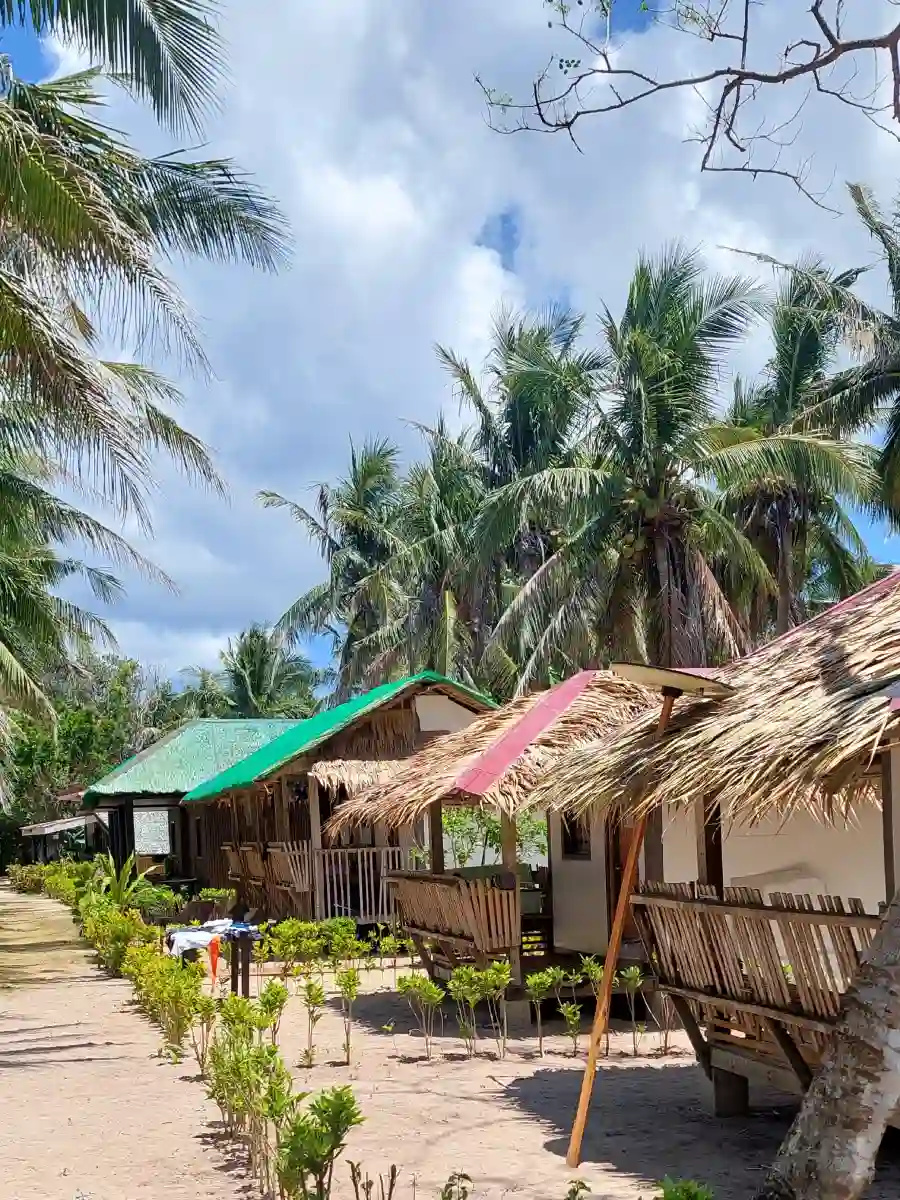
Coconut palms line most of the coast in loose, tall rows, and the air moves through them constantly. Some stretches of beach run clean and flat with nothing but sand underfoot, while others break apart into patches of dark rock that the tide either covers or exposes depending on the hour. No big waves showed up during the three days, just steady, calm water that made wading out feel more like an afterthought than a decision.
Dinner on the Charcoal Grill at La Sable Beach Resort
La Sable Beach Resort offers rooms with aircon and rooms without, and both come at a price most travelers would call affordable. Power on the island runs out for stretches more often than not, which makes the fan rooms the more sensible pick. Without electricity, an aircon unit is just a box on the wall, and the natural breeze coming off the water does the job anyway.
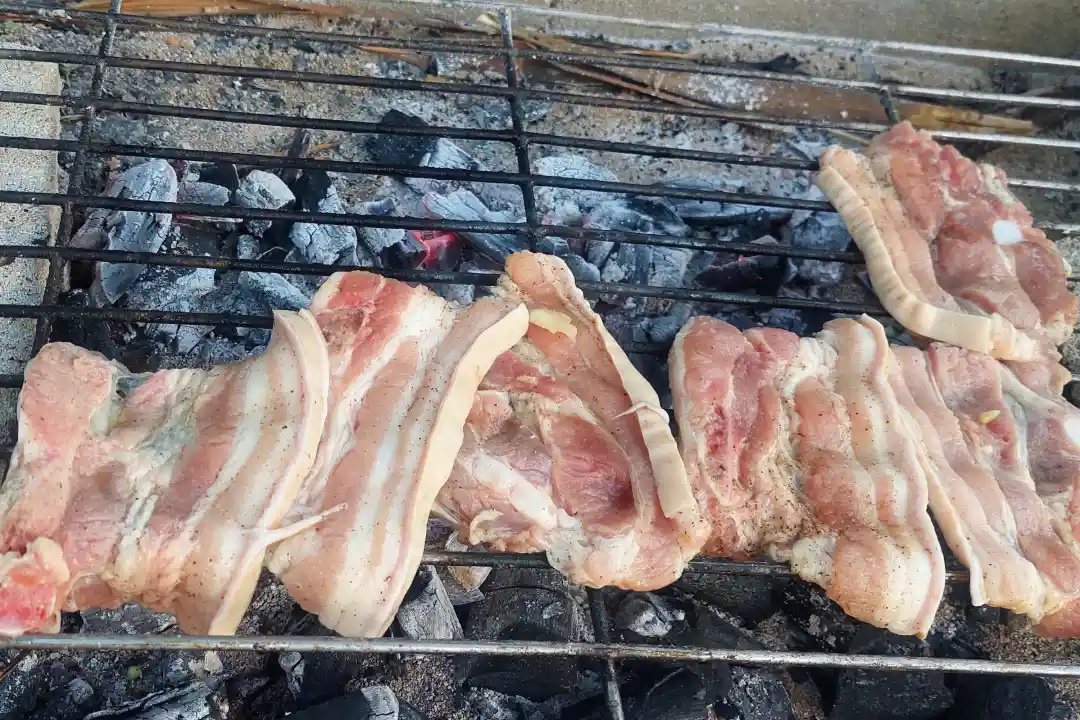
That first evening, instead of ordering from the resort kitchen, we cooked our own dinner over a charcoal grill. Pork belly went on first, cut into strips and laid straight across the grate with nothing but salt for seasoning.
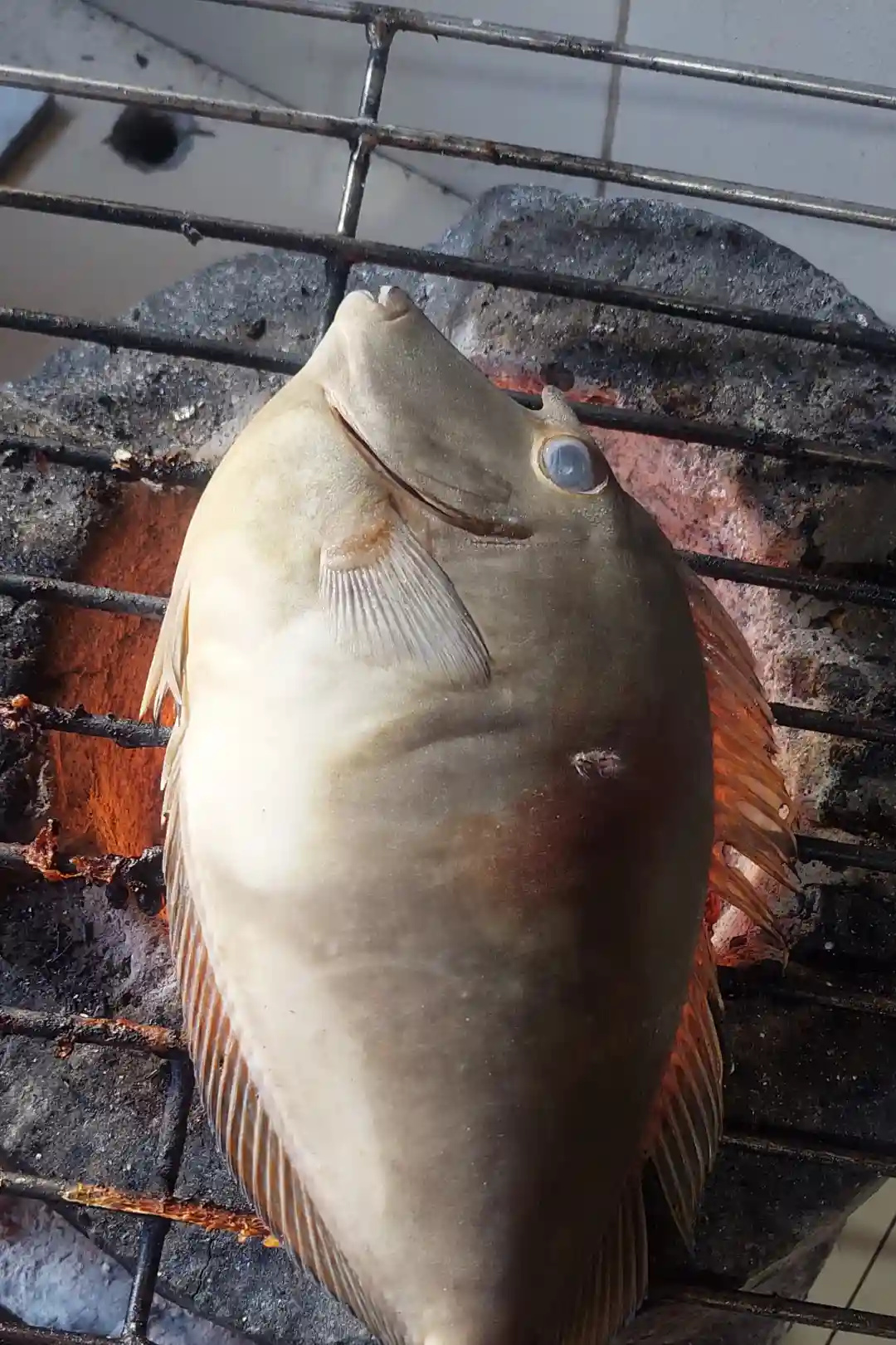
Fish followed once the coals had settled into a steadier heat, a whole one laid flat so the skin could crisp without falling apart. Fish turned out to be the better deal all around. Meat cost more on the island than fish did, a detail that runs backward from how most coastal towns price things.
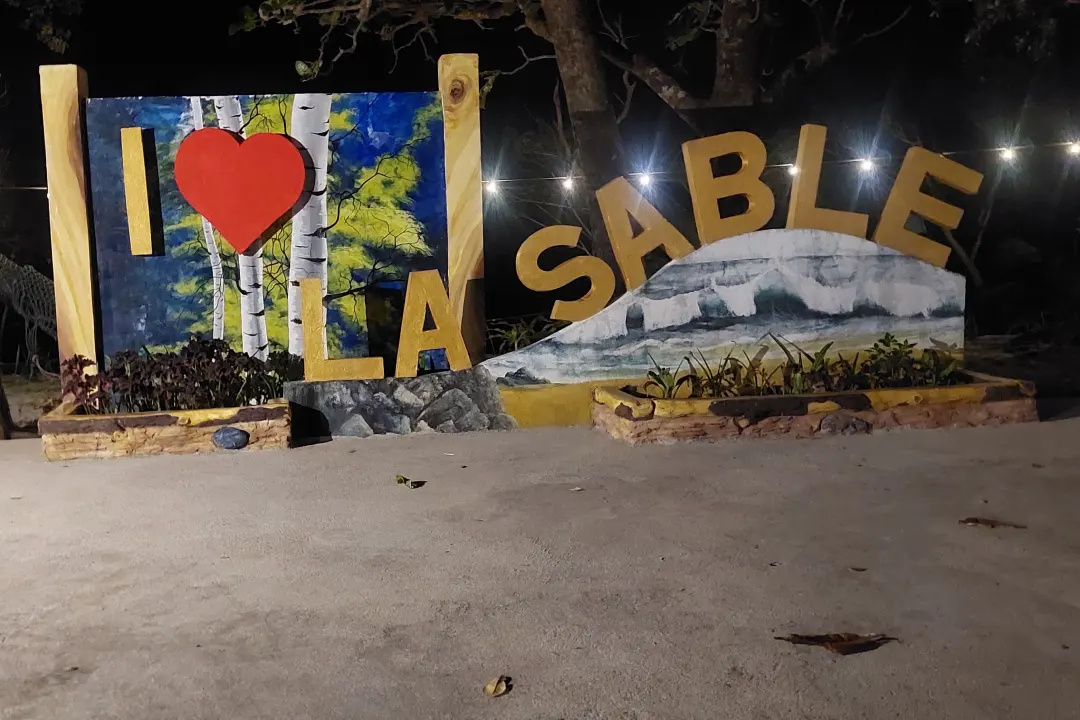
Night on Jomalig comes with its own rhythm of light. Power cut on and off through the evening, and the sign near the entrance caught the dark each time the lights came back, string lights glowing against the trees behind it.
Turtle Rock Jomalig and the Walang Forever Tree
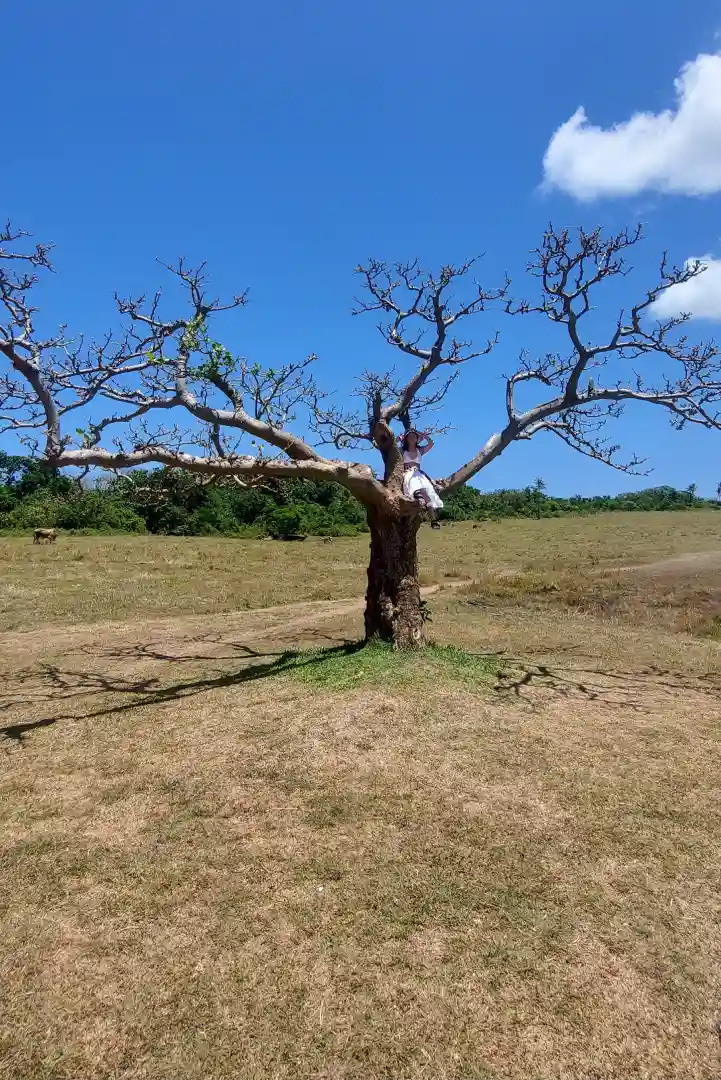
The second day was built around a van tour of the island, covering the spots most travelers come to see. First stop was a single tree standing alone in an otherwise empty field, known locally as Puno ng Walang Forever, which translates roughly to the tree without forever.
Later that afternoon, the tour reached the stretch of coast where Turtle Rock sits, a cluster of dark formations rising straight out of the shallows. Tide pools collect between the stones, and the contrast between the pale gold sand and the almost black rock makes for one of the more distinct stretches of coastline on the island. The same layered, weather worn stone shows up on the other side of the country too, along the shoreline at Payag ni Jose in Lanca, Mati City, just under a different name and a much shorter ride from the mainland.
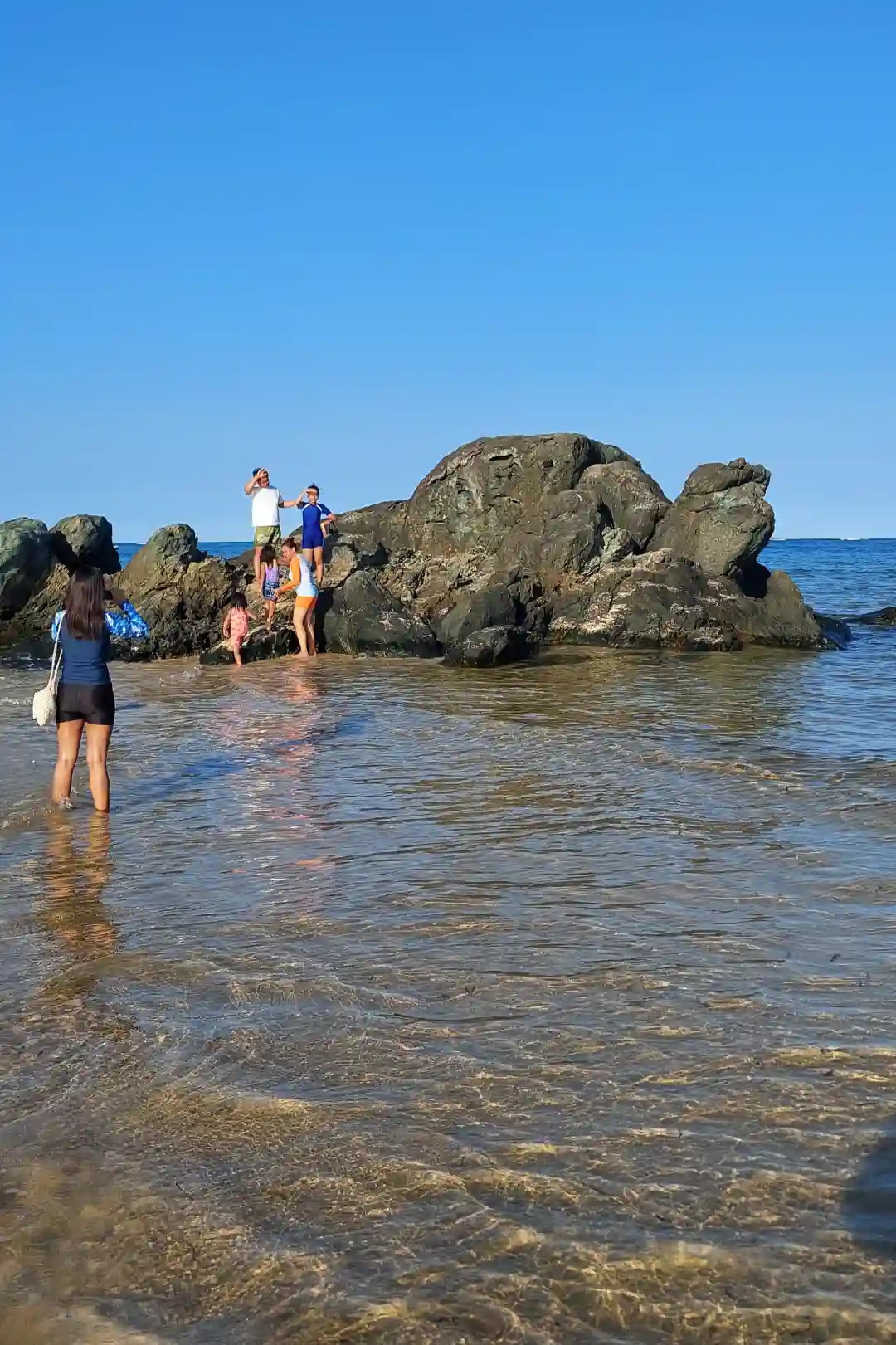
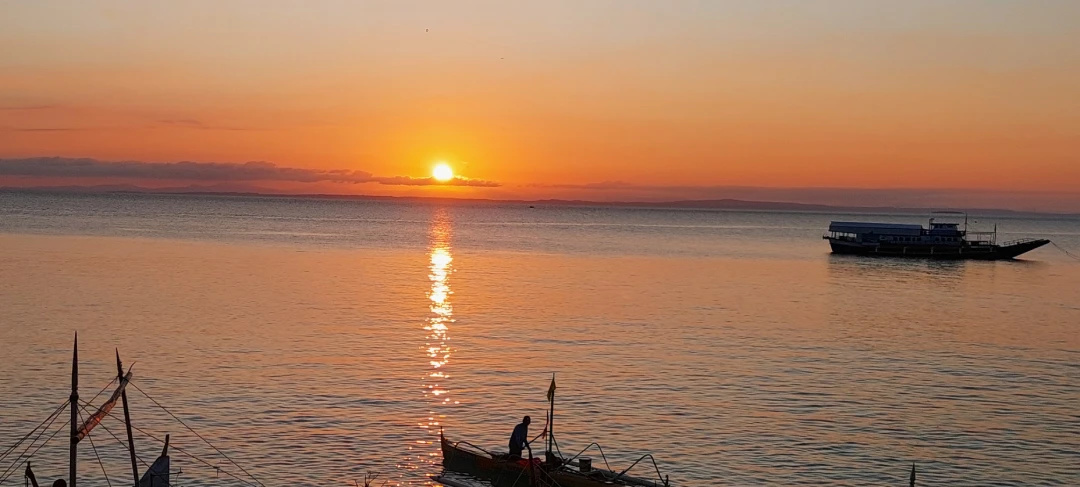
By the time the sun dropped low enough to turn the water orange, the tour was already wrapping up for the day. Small fishing boats sat anchored just offshore, still as the light faded around them.
What a Van Tour Misses on Jomalig Island Quezon Province
A van can only follow the road as far as the road goes, and on Jomalig that is not very far. Several of the island's named attractions sit past where any vehicle can reach, which turns a van tour into a van ride followed by more walking than most people plan for. We paid thirty five hundred pesos for our van tour and still came home without seeing the White Sand Beach, simply because the road gave out before we got close. The same problem shows up wherever a coastline outruns its own roads. The motorcycle ride up Lanca Cabuaya Road to the Pacific View Deck in Davao Oriental only works at all because two wheels can take a route four cannot.
A motorcycle tour runs about a thousand pesos and covers the same ground a van does, minus the walking. Locals get around the island on habal habal for a reason, since the narrower trails that cut across grassland and skirt the coastline suit two wheels better than four. If reaching every named spot on the island matters to you, the motorcycle is the better call.
Last Hours on the Island Before the Boat Back
The plan was to leave at eight in the morning on the third day. The queue for the return boat had other plans. By midday we were still on the island, which gave us one more look at the row of nipa hut cottages tucked under the palms at La Sable before checking out for good.
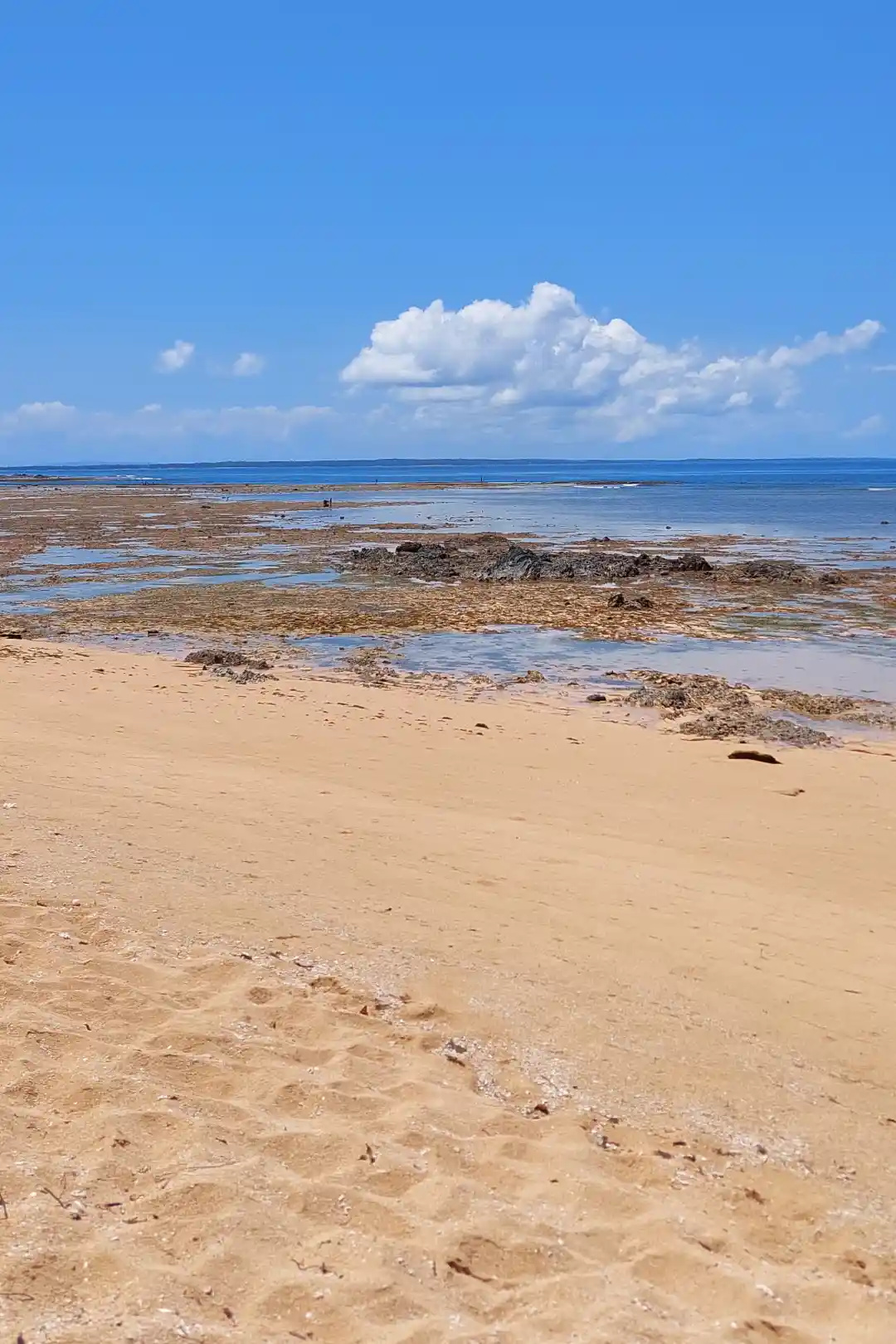
We used the extra hours for a last walk along the shore at low tide, where the reef flat had pulled back to reveal sand stretching almost to the horizon. It was a quieter version of the same coastline we had been circling for three days, easier to appreciate now that there was nowhere left to rush off to.
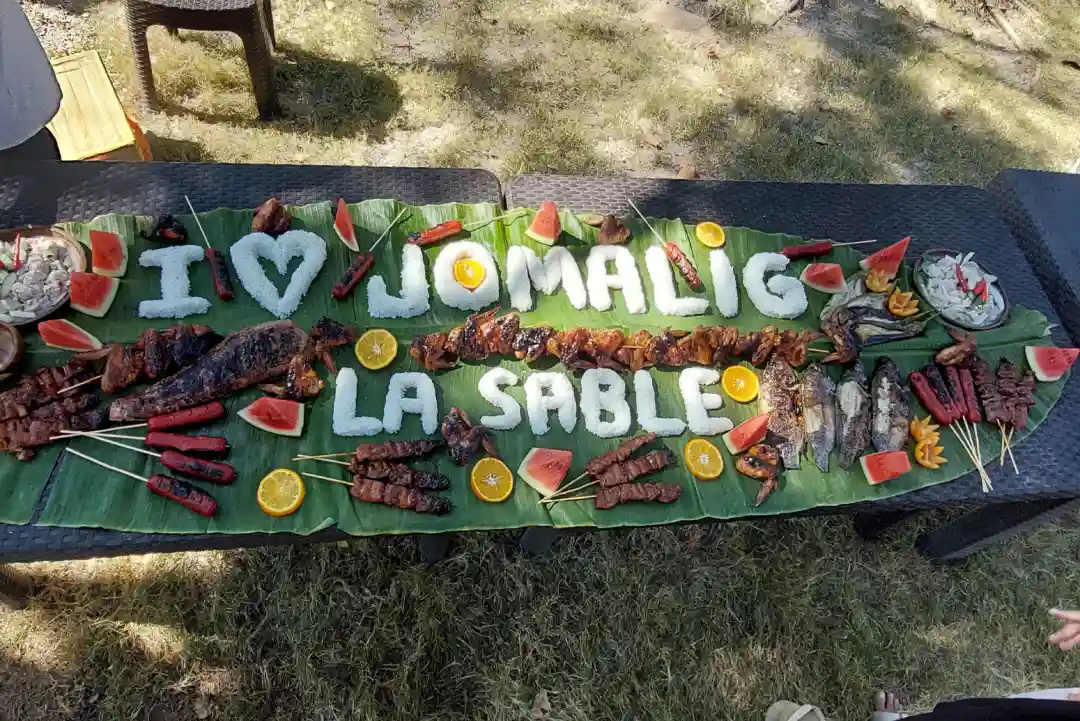
La Sable sent us off with a spread laid out across banana leaves, rice molded into letters that spelled out I Love Jomalig La Sable, grilled meat and fish arranged around the edges with watermelon and orange wedges filling the gaps. It read like a goodbye more than a meal, the kind of thing that made the long wait for the boat back a little easier to sit through.
What Food Actually Costs on Jomalig Island
Food on Jomalig runs more expensive than the accommodation does, which catches most first time visitors off guard. Fish stays affordable since it comes straight off boats that go out daily, but meat costs noticeably more. Guests can order meals at their accommodation, though only within whatever ingredients happen to be available that day.
Cooking your own food, the way we did most nights, ends up being the more reliable option. It also means packing more than you think you will need. Bring as much food from the mainland as your bags can hold, since what is available on the island will not always match what you are craving.
Getting to Jomalig Island From Manila and Real Port
The full trip from Pasay to Jomalig Island, Quezon Province runs through several stages worth laying out clearly. A private vehicle covers the three hours from Manila to Real Port, where parking costs a hundred pesos a day if you are leaving a car behind. From there, the boat to Jomalig costs seven hundred pesos per person and takes close to five hours, depending on how the sea is behaving that day.
Expect to wait. Boats here run on demand rather than a fixed clock, and during busy weeks the queue alone can eat up several hours before you even board. Arriving at the port early gives you a better shot at a spot on the first available boat rather than the second or third.
Is Jomalig Island Worth the Five Hour Boat Ride
Three days was enough to see why Jomalig Island, Quezon Province keeps coming up whenever people talk about islands that still feel unfinished in the best way. The municipal government has been working with the Department of Tourism on a cruise tourism program that brought a group of foreign visitors to the island in December 2025, a sign that more outsiders are starting to pay attention. Jomalig is not the only Philippine beach stuck with stale write ups online either. Alona Beach in Panglao, Bohol carried the same problem for years, with prices and crowds that had moved on long before most of the blogs about it did.
None of that changes what getting there still requires. You will queue for boats both ways, and you may lose hours to a delayed departure that nobody can fully explain. You will also pay more for a plate of meat than for the room you sleep in. Bring a drone if you own one. Pack more food than feels necessary. Pick a motorcycle over a van if reaching every named spot on the island actually matters to you. None of that takes away from what the place offers once you are standing on it: a shoreline that resets itself every few hours, air that moves constantly, and a kind of quiet that most beaches closer to Manila gave up a long time ago.
Frequently Asked Questions About Jomalig Island Quezon Province
Jomalig Island is a municipality in Quezon Province, in the Calabarzon region of the Philippines. It sits in Lamon Bay as part of the Polillo Islands group, well southeast of the Quezon mainland and past Polillo itself. The island is reached by boat from Real, Quezon, which is the common jump off point for most visitors.
The boat ride from Real Port in Quezon to Jomalig Island takes close to five hours and costs around 700 pesos per person. Boats run on demand rather than a fixed schedule, so expect a queue at the port before boarding, especially during busy weeks.
The route runs through Real Port in Quezon. From Metro Manila, expect about three hours by private vehicle or bus to reach Real. Parking at the port costs around 100 pesos per day if you are leaving a vehicle behind. From Real, the passenger boat to Jomalig takes close to five hours at around 700 pesos per person. A short van ride from the Jomalig port to most accommodations costs about 50 pesos per person.
Boats to Jomalig Island leave from Real Port in Quezon, also known locally as Ungos Port. It is the standard jump off point regardless of where in Luzon you are starting from.
A few figures from a recent visit: 100 pesos per day to park a vehicle at Real Port, 700 pesos per person for the boat ride to Jomalig, 50 pesos per person for the van transfer from the Jomalig port to the accommodation, 3500 pesos for a full van tour of the island, and around 1000 pesos for a motorcycle tour covering the same ground. Food on the island tends to cost more than the room, with meat priced higher than fish.
Most visitors book either a van tour or a motorcycle tour to reach the named attractions. A van tour runs about 3500 pesos but cannot reach every spot since several attractions sit past where any vehicle can drive, which means more walking. A motorcycle tour runs about 1000 pesos and reaches the same ground with far less walking, since the narrower trails suit two wheels better than four.
Yes, with a few things to plan around. Expect to queue for boats both ways, expect food to cost more than the room, and expect a van tour to miss a few named spots that a motorcycle would reach. In exchange, Jomalig offers a calm, clean shoreline with golden sand and dark rock formations, breezy air, and very little crowding compared to beaches closer to Manila.
Jomalig Island has long stretches of golden sand broken up by patches of dark volcanic rock that the tide covers and exposes depending on the hour. Coconut palms line most of the coast, the air moves constantly, and the water stays calm with no big waves. Power on the island runs out for stretches, so many visitors choose fan rooms over air conditioned ones.